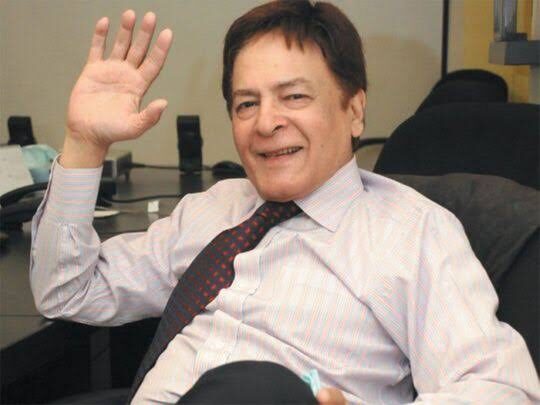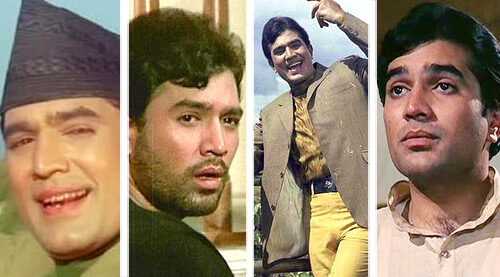




Dilip Kumar Dies at 98 – A trip down memory lane
Nicknamed “The Tragedy King” because of his brooding good looks, disheveled hair, and deep voice, Kumar played the lead in some of the Indian film industry’s most commercially successful films of the period, earning him iconic status.
But although a Bollywood legend, he missed out on international fame after turning down the chance to play Sherif Ali in David Lean’s 1962 classic Lawrence of Arabia. The part went to an Egyptian actor, Omar Sharif.
Kumar was born Yusuf Khan on December 11, 1922, in Peshawar, then part of British-ruled India. His father was a fruit merchant who took his family to India’s entertainment capital in the 1930s. But Yusuf turned his back on the chance to take over the firm when the actress Devika Rani spotted him on his father’s fruit stall in the then Bombay, leading to a part in his first film, Jwar Bhata 1944.
Rani persuaded him to change his name, so he chose Dilip Kumar, allowing him to hide what he was doing from his disapproving father. Although Jwar Bhata flopped and leading film magazines criticized his performance Kumar was undeterred and ultimately broke through with the 1946 film Milan.
Among his most remembered roles was in the lavish historical romance Mughal-e-Azam, based on the life of one of India’s great Mughal princes.
The movie, released in 1960, was eight years in the making and cost a mind-boggling 15 million rupees, but soon became one of Bollywood’s biggest-grossing films of all time.
Kumar, who cited Hollywood greats Marlon Brando, Gary Cooper, and Spencer Tracy as influences, later won acclaim in 1964 for the nationalistic Leader, screened against a backdrop of recent wars against China and Pakistan.
The 1970s saw fewer roles, as younger actors like Amitabh Bachchan took center stage.
He even took a five-year break after a string of flops, returning in 1981 with the hit Kranti (revolution) and a part alongside Bachchan in Shakti (strength) the following year, plus a string of character roles
After a series of badly-received films, he took up a more active role in politics in 1998 and worked to end the feuding between India and Pakistan.
The same year saw him receive the highest civilian honor in Pakistan, angering Hindu nationalists. Two years later he became a lawmaker for the then-opposition Congress party.
Unlike many actors who appeared in hundreds of films, the versatile Kumar carefully selected those, by Indian standards, which only increased his stature in the fiercely competitive industry.
In 2006 he accepted a lifetime achievement award at India’s National Film Awards in recognition of his contribution to Indian cinema.
Yet he still admitted that he was baffled at his success.
“Honestly, I’ve still to figure out how an intensely shy young man called Yusuf Khan became the actor Dilip Kumar,” he told The Hindustan Times in an interview to mark his 85th birthday.
Today the superstar left us at the age of 98 and condolences poured in as Bollywood and politicians alike mourned the loss of the actor. Prime Minister Imran Khan said that Kumar was the “greatest and most versatile actor” for his generation and Indian Prime Minister Narendra Modi said that Dilip Kumar will be remembered as a “cinematic legend”.